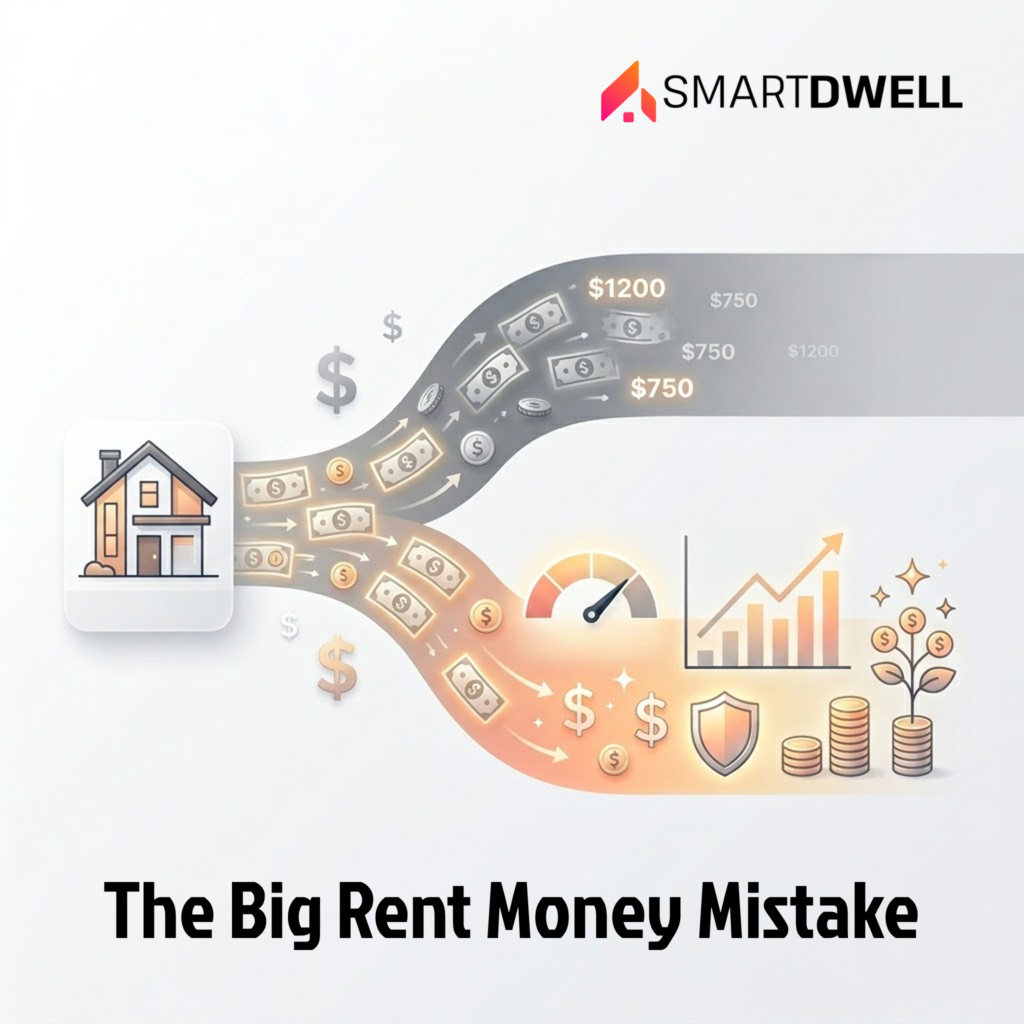
If you pay $2,000 in rent each month, you’ll spend:
- $24,000 per year
- $120,000 in five years
- $240,000 in ten years
That’s nearly a quarter of a million dollars.
Now here’s the real question:
What is that money doing for your financial future?
For most renters — absolutely nothing.
No asset growth.
No credit power.
No financial leverage.
But that’s not because rent is useless.
It’s because rent is usually unmanaged.
Rent Isn’t the Problem — Strategy Is
People often say:
“Rent is throwing money away.”
That’s not entirely true.
The real problem is this:
Most renters pay their largest expense in the least strategic way possible.
They:
- Send manual transfers
- Ignore credit optimization
- Miss reward opportunities
- Fail to track payment impact
Rent becomes a passive transaction instead of an active financial tool.
That’s where the shift happens.
Your Rent Is a Financial Data Point
Every lender, bank, and financial institution cares about one thing:
Consistency.
They want proof that you can handle fixed monthly obligations reliably.
Rent is the strongest proof of that — because it’s usually your largest recurring payment.
But if your rent isn’t being structured or reported correctly, that proof stays invisible.
Financially speaking, you exist — but you leave no footprint.
The Power of Payment Structuring
There are three financially intelligent ways to rethink rent:
1. Turn It Into Credit Strength
When rent payments are documented and reported, they become a record of reliability.
Over time, consistent reporting can:
- Improve approval chances
- Strengthen credit depth
- Increase borrowing confidence
That creates leverage.
2. Use It to Improve Cash Flow Control
Late fees, forgotten transfers, and misaligned payment dates quietly drain money.
Automation fixes that.
Predictable outflows create:
- Cleaner budgeting
- Stronger saving habits
- Less stress-based spending
Financial clarity leads to better decisions.
3. Align Rent With Reward Systems
When structured properly, large recurring expenses can:
- Generate points
- Produce cashback
- Increase financial efficiency
You are already spending the money.
The question is whether it works for you.
The Opportunity Cost of Doing Nothing
Let’s compare two renters over five years:
Renter A
- Pays manually
- Misses occasional deadlines
- Builds no credit from rent
- Gains no financial advantage
Renter B
- Automates payments
- Ensures consistent reporting
- Maintains clean payment history
- Uses rent strategically
After five years, their rent amount is identical.
But their financial profiles are completely different.
One has documented reliability and stronger credit positioning.
The other has empty financial records.
Same rent. Different outcomes.
Financial Growth Is Often Hidden in Ordinary Bills
Most people look for wealth-building in:
- Investments
- Side hustles
- Promotions
- Real estate
Few look at expense optimization.
But disciplined financial growth often starts with managing fixed costs intelligently.
Your largest recurring expense should not be your biggest missed opportunity.
The Smarter Renter Mindset
Financially aware renters ask different questions:
- Is this payment helping my financial profile?
- Is my rent documented properly?
- Am I preventing avoidable penalties?
- Is my largest expense strategically aligned?
When rent becomes structured instead of reactive, your financial position strengthens — even if your income stays the same.
That’s the real shift.
Final Perspective
You don’t need to increase your rent to improve your finances.
You don’t need to take on risky investments.
You don’t need new debt.
Sometimes, the smartest move is optimizing what already exists.
Rent is unavoidable.
Financial inefficiency isn’t.
Over ten years, the difference between passive rent payments and strategic rent management can quietly reshape your financial future.
And most renters never even realize it.